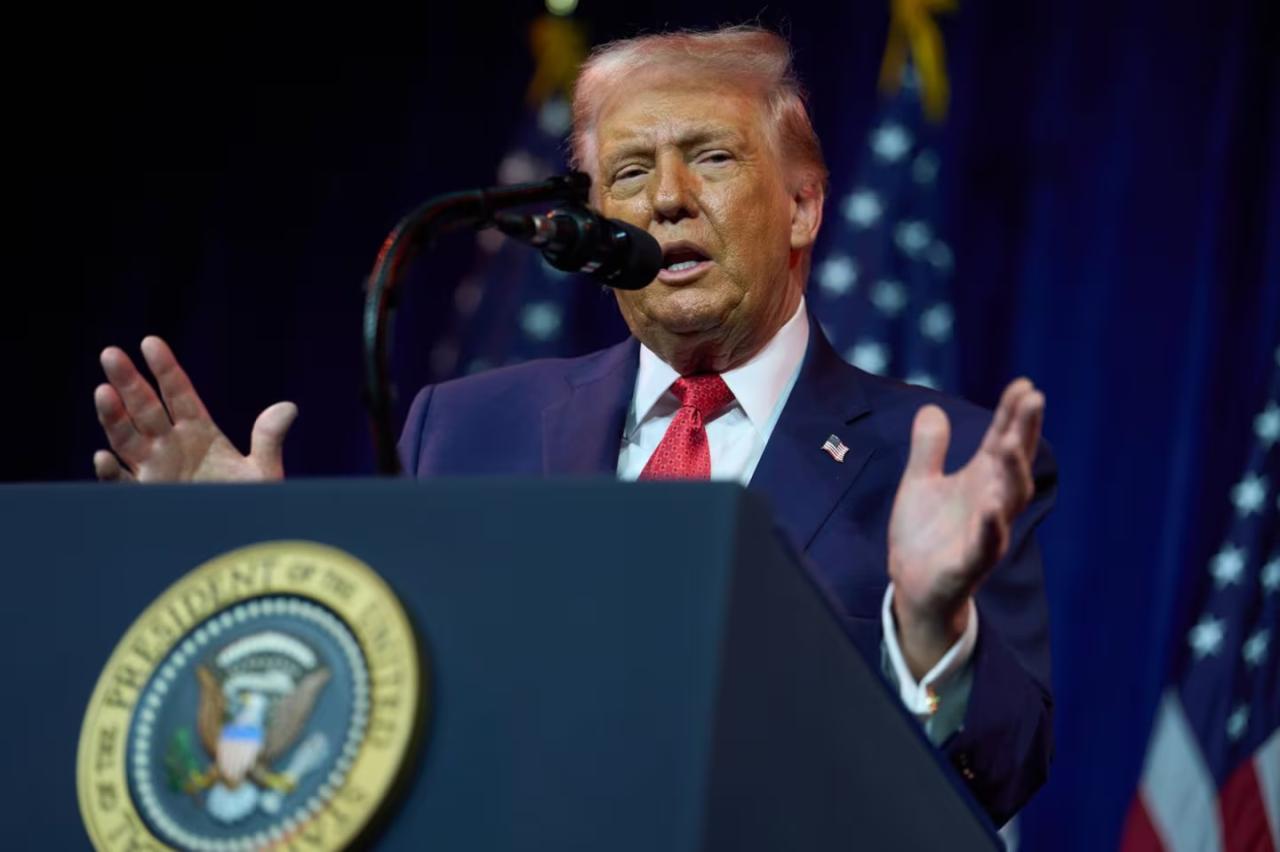
Republicans in the U.S. Senate have effectively blocked a rare war powers resolution that sought to limit President Donald Trumps authority to use military force in Venezuela.The measure had advanced in a procedural vote last week after five Republican senators joined Democrats in support, marking a surprising setback for Trump following a U.S. operation that led to the capture of Venezuelan leader Nicolas Maduro. The vote was widely viewed as a rebuke of the presidents decision to authorise the operation without informing members of the Senate Armed Services Committee. Trump quickly lashed out at the Republican defectors on social media, while the White House launched an aggressive lobbying effort to kill the resolution. On Wednesday, Senate Republicans employed a procedural tactic to strip the resolution of its privileged status, which would have allowed it to pass with a simple majority. They argued the rule did not apply because there were no ongoing hostilities in Venezuela. The move made passage virtually impossible. With Republicans holding a 5347 majority in the Senate, Democrats lack the numbers needed to meet the new 60-vote threshold required for approval. Trump claims his war in Venezuela is righteous. If thats the case, why is he browbeating his party into using a procedural scheme to avoid a debate and vote in Congress in front of the American people? said Democratic Senator Tim Kaine of Virginia. Kaine introduced the resolution after U.S. special forces captured Maduro in Caracas on January 3, saying it was intended to reaffirm Congresss constitutional authority to declare war. The measure would have required Trump to seek congressional approval before taking further military action in Venezuela. Two of the five Republicans who initially supported the resolution later reversed their positions after receiving assurances from Secretary of State Marco Rubio that there were no plans to deploy ground troops and that Congress would be consulted if that changed. Following the initial vote, Trump warned that the five senators should never be elected to office again. Even if the resolution had passed the Senate, it was largely symbolic. It faced almost certain defeat in the Republican-controlled House of Representatives and would have required a two-thirds majority in both chambers to override a presidential veto. Democrats framed the effort as a constitutional stand after what they described as months of misleading briefings, including assurances as recently as November that there were no plans for military action on Venezuelan soil. The White House defended the operation as legally justified, describing it as part of a broader campaign against transnational drug trafficking and targeting cartels designated as terrorist organisations. While some Republicans initially warned the operation could draw the U.S. into deeper involvement without congressional oversight, Trump has since insisted that such efforts are necessary for national security. He has also suggested U.S. involvement in Venezuela could last for years and has shared online posts portraying himself as Acting President of Venezuela. Since Trump returned to office, similar war powers resolutions related to Venezuela have been rejected four times in Congress. Over the past century, only one congressional measure has successfully imposed a lasting limit on unilateral presidential military action abroad: the War Powers Resolution of 1973. The post US Senate backs down on limiting Trumps Venezuela War Powers after facing pressure from him appeared first on Linda Ikeji Blog.

 If I were a woman I will never agree to marry a man that proposes 50-50 for our finances – Nigerian man says
 Singer, Johnny Drille responds after being called a low-level man
 “Divorce” – American woman shares her top resolution for 2026 four months after she married her Nigerian husband
 Supreme Court rejects Presidential Clemency for Maryam Sanda, Upholds d3ath sentence