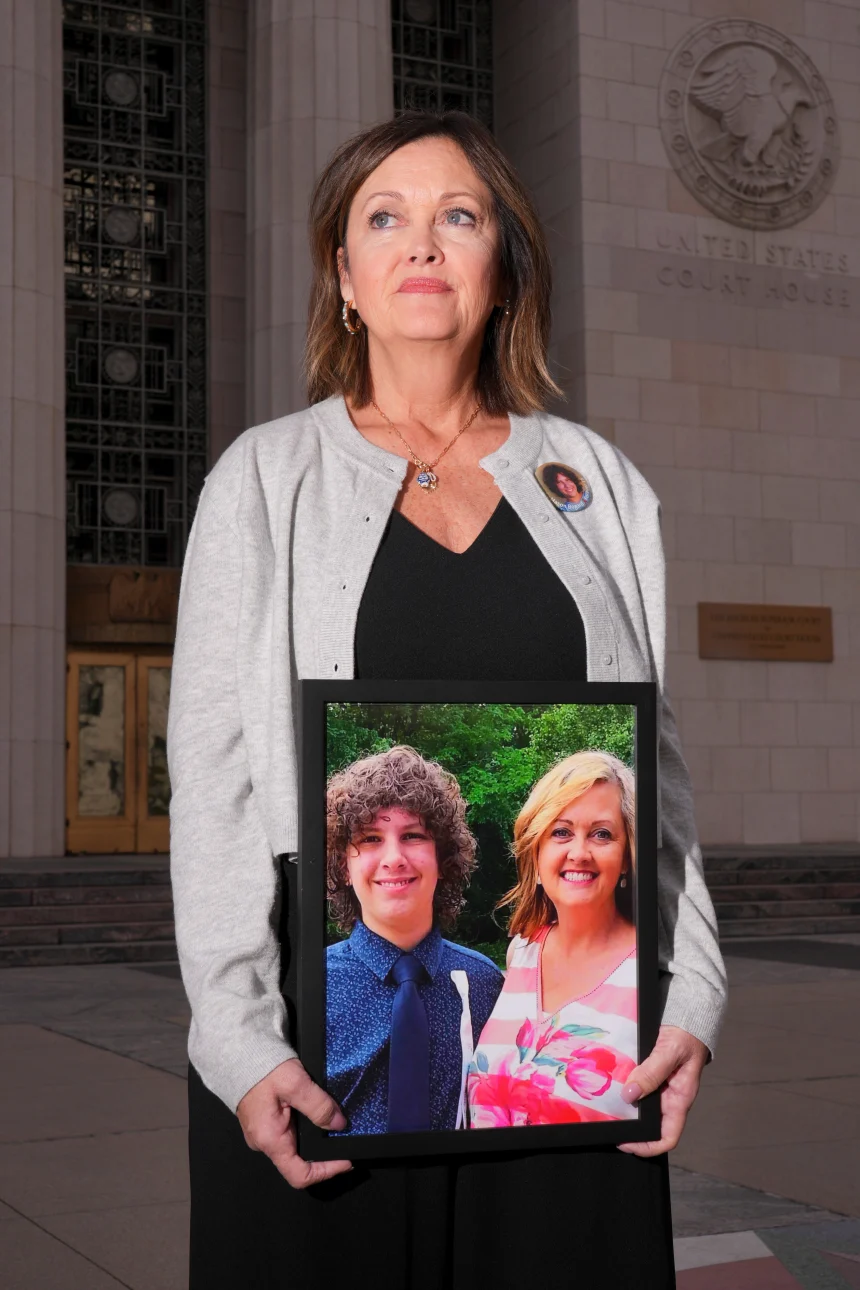
Joann Bogard of Wadesville, Indiana, mother of Mason, 15, holds a vigil for children who have died due to alleged social media harms on February 5, 2026 at the Los Angeles Superior CourthouseLawyers for a now 20-year-old woman have argued that Instagram and YouTube were deliberately designed to be addictive and caused serious harm to her mental health, as opening statements began in a landmark social media trial in Los Angeles. The case, the first of hundreds of similar lawsuits expected to go to trial, centres on a young woman identified by her first name, Kaley, or by her initials, KGM. Kaley and her mother accuse the tech companies of intentionally engineering addictive platforms that led to anxiety, body dysmorphia and suicidal thoughts. Speaking before a jury, Kaleys lawyer, Mark Lanier, described social media platforms as digital casinos, arguing that features such as endless scrolling are designed to trigger dopamine responses and foster addiction. This case is about two of the richest corporations who have engineered addiction in childrens brains, Lanier said. The swipe, for a child like Kaley, is like pulling the handle of a slot machine. But every time she swipes, its not for money, but for mental stimulation. Lawyers for the companies have countered that Kaleys mental health struggles were rooted in a difficult family life rather than social media use, and that the platforms may have served as a creative and emotional outlet for her. The trial is being closely watched by parents and child safety advocates, who say it represents a critical moment of accountability for social media companies. Several top technology executives are expected to testify in the coming weeks. The outcome could shape how roughly 1,500 similar lawsuits are resolved. Potential losses could expose the companies to billions of dollars in damages and force changes to platform design. Kaley also brought claims against Snap and TikTok, both of which reached settlements before the trial, though they remain defendants in other cases. The companies have long denied that their platforms harm young users, pointing to safety measures such as parental controls, time reminders and content restrictions. A lawyer for one of the companies argued that Kaleys mental health challenges predated heavy social media use and highlighted testimony from therapists who said social media was not a central cause of her distress. One therapist testified that Kaley never reported feeling addicted to Instagram, while another recalled that social media was not a major theme in her treatment. Lanier, however, cited internal company documents that he said showed deliberate efforts to attract children and teens. He pointed to strategies encouraging early engagement, autoplay, infinite scroll, like buttons that reward validation-seeking behaviour, and beauty filters that alter appearance. Kaley reportedly began using YouTube at age six and Instagram at age nine, sometimes spending several hours a day on the platforms. According to records presented in court, she once spent more than 16 hours on Instagram in a single day at age 16. Lanier also referenced an internal study which he said showed children experiencing emotional distress were more likely to become addicted, and that parents often struggled to stop the behavior. The moment Kaley was locked into the machine, her mom was locked out, he saidIn the lawsuit, Kaley also alleged she experienced online bullying and sextortion on Instagram. The defence highlighted new platform tools introduced in recent years, including content controls, notification limits and sleep modes, arguing these features demonstrate efforts to protect young users. Jurors were instructed not to research the case or alter their online behaviour during the trial. They were also told not to hold the companies liable for third-party content itself, but to focus on whether platform design features contributed to mental health harm. The post Lawyers argue Instagram and YouTube intentionally addicted and harmed teen in landmark social media trial appeared first on Linda Ikeji Blog.

 Captured Venezuelan President Nicolas Maduro could face death penalty if convicted in the US
 May the Almighty ease her steps into this new chapter – Zahra Buhari-Indimi prays for her mother as she completes period of mourning
 Iran says it is open to talks with US but prepared for war
 Rapper Max B released from prison after 16 years