
Peter Obi slams Nigeriaâs debt strategy as he accuses FG of borrowing without delivering productivity or real economic progress
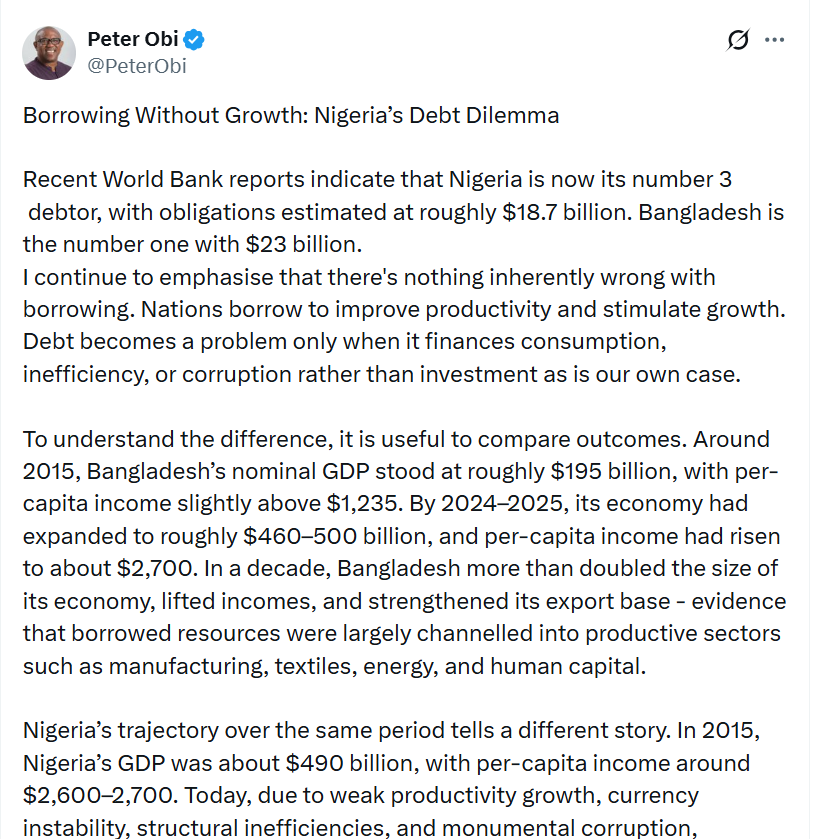
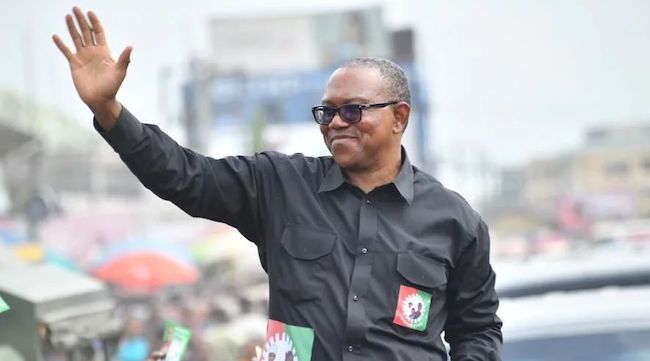 Former Anambra State governor and Labour Party presidential candidate Peter Obi has raised concerns over Nigerias rising debt profile, warning that borrowing without corresponding economic growth is worsening the countrys financial position.In a post shared on X, Obi cited recent World Bank reports indicating that Nigeria is now the third-largest debtor to the institution, with obligations estimated at about $18.7 billion. He noted that Bangladesh ranks first, owing approximately $23 billion.Obi stressed that borrowing in itself is not inherently wrong. Nations borrow to improve productivity and stimulate growth, he wrote, adding that debt becomes problematic only when it finances consumption, inefficiency, or corruption rather than investment as is our own case.To illustrate his point, Obi compared Nigerias economic performance with that of Bangladesh over the past decade. He said that in 2015, Bangladesh had a nominal GDP of about $195 billion and a per-capita income slightly above $1,235. By 20242025, he noted, Bangladeshs economy had grown to between $460 billion and $500 billion, with per-capita income rising to roughly $2,700.In a decade, Bangladesh more than doubled the size of its economy, lifted incomes, and strengthened its export base, Obi stated, attributing the growth to borrowed funds being channelled into productive sectors such as manufacturing, textiles, energy and human capital development.In contrast, he said Nigerias economy has declined over the same period. According to Obi, Nigerias GDP stood at about $490 billion in 2015, with per-capita income around $2,600 to $2,700. He claimed that today, Nigerias GDP is below $250 billion, with per-capita income between $850 and $1,000, citing weak productivity growth, currency instability, structural inefficiencies and corruption as key factors.The contrast is instructive, he wrote. One country borrowed and expanded production, exports, and incomes. The other borrowed but saw declining economic strength and living standards.Obi argued that the core issue is not the size of borrowing but how the funds are used. Debt tied to infrastructure, industry, and human development fuels growth. Debt tied to consumption, leakages, and corruption deepens stagnation, he said.He concluded by calling for a shift in policy direction, stating that a new Nigeria where loans, if taken, will translate into productivity instead of consumption is very much possible.
  The post Peter Obi slams Nigerias debt strategy as he accuses FG of borrowing without delivering productivity or real economic progress appeared first on Linda Ikeji Blog.
Related Posts
-
 Actor Yomi Gold hospitalised after sudden health scare, shares message on life and gratitude
-
 65-year-old woman wakes up and knocks on coffin minutes before she was to be cremated in Thailand (video)
-
 Sen Ned Nwoko threatens legal action over alleged coordinated online defamation campaign
-
 “Soludo, We No Go Gree” — Traders Flood Onitsha Market to Protest One-week Closure
Peter Obi slams Nigeriaâs debt strategy as he accuses FG of borrowing without delivering productivity or real economic progress
Former Anambra State governor and Labour Party presidential candidate Peter Obi has raised concerns over Nigerias rising debt profile, warning that borrowing without corresponding economic growth is worsening the countrys financial position.In a post shared on X, Obi cited recent World Bank reports indicating that Nigeria is now the third-largest debtor to the institution, with obligations estimated at about $18.7 billion. He noted that Bangladesh ranks first, owing approximately $23 billion.Obi stressed that borrowing in itself is not inherently wrong. Nations borrow to improve productivity and stimulate growth, he wrote, adding that debt becomes problematic only when it finances consumption, inefficiency, or corruption rather than investment as is our own case.To illustrate his point, Obi compared Nigerias economic performance with that of Bangladesh over the past decade. He said that in 2015, Bangladesh had a nominal GDP of about $195 billion and a per-capita income slightly above $1,235. By 20242025, he noted, Bangladeshs economy had grown to between $460 billion and $500 billion, with per-capita income rising to roughly $2,700.In a decade, Bangladesh more than doubled the size of its economy, lifted incomes, and strengthened its export base, Obi stated, attributing the growth to borrowed funds being channelled into productive sectors such as manufacturing, textiles, energy and human capital development.In contrast, he said Nigerias economy has declined over the same period. According to Obi, Nigerias GDP stood at about $490 billion in 2015, with per-capita income around $2,600 to $2,700. He claimed that today, Nigerias GDP is below $250 billion, with per-capita income between $850 and $1,000, citing weak productivity growth, currency instability, structural inefficiencies and corruption as key factors.The contrast is instructive, he wrote. One country borrowed and expanded production, exports, and incomes. The other borrowed but saw declining economic strength and living standards.Obi argued that the core issue is not the size of borrowing but how the funds are used. Debt tied to infrastructure, industry, and human development fuels growth. Debt tied to consumption, leakages, and corruption deepens stagnation, he said.He concluded by calling for a shift in policy direction, stating that a new Nigeria where loans, if taken, will translate into productivity instead of consumption is very much possible.  The post Peter Obi slams Nigerias debt strategy as he accuses FG of borrowing without delivering productivity or real economic progress appeared first on Linda Ikeji Blog.


